
Post-Winter Roof Inspection Checklist
A GTA winter puts real stress on a roof through freeze-thaw cycling, snow load, and ice damming. Here is a zone-by-zone way to check for damage once the snow clears.
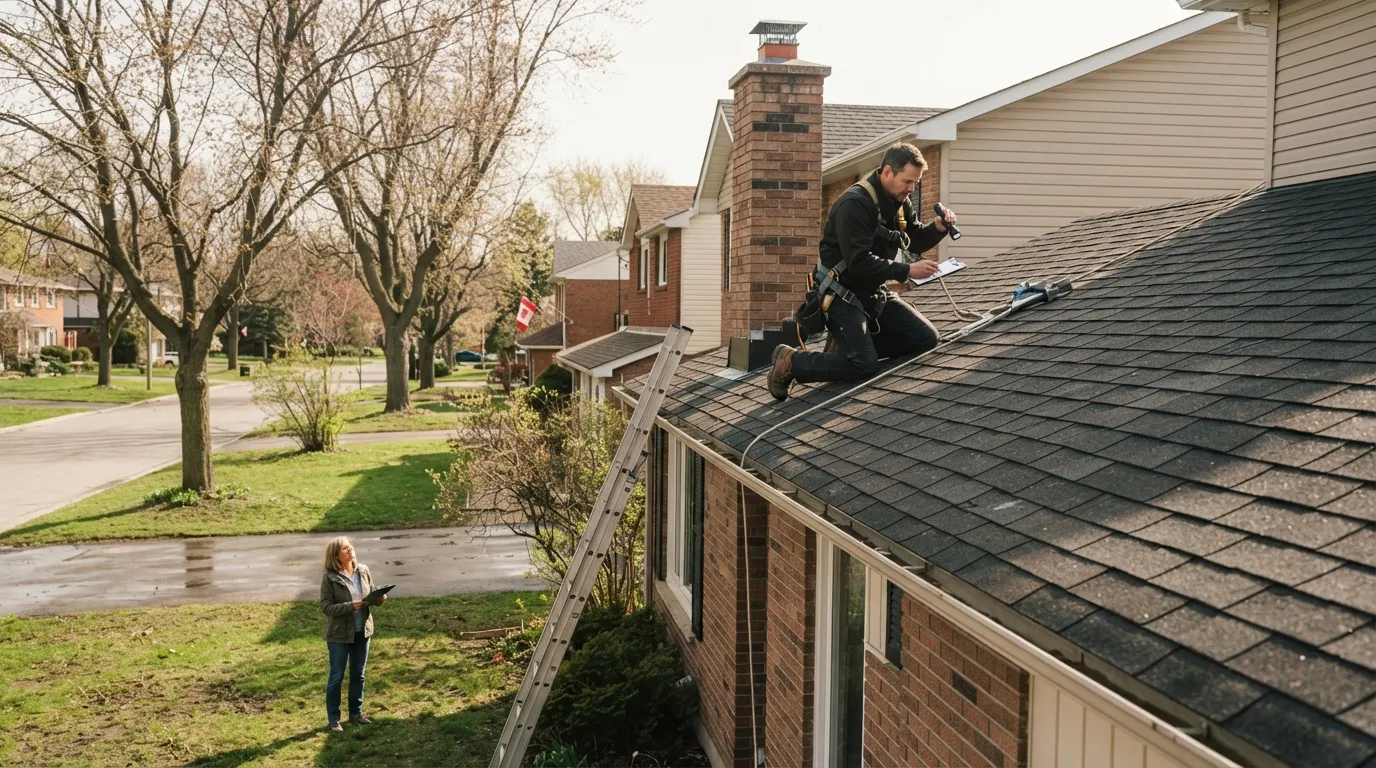
Why Spring Is the Right Time to Inspect
A roof accumulates most of its annual wear during the winter months in this climate, from repeated freeze-thaw flexing of shingles, from wind events, and from the weight and meltwater of accumulated snow. Spring, once the snow is gone and temperatures are consistently above freezing, is the window to assess what the winter actually did before summer storm season adds another layer of stress on top.
Damage from winter is often not obvious from inside the house
A lifted shingle tab, a cracked piece of flashing, or granule loss around a vent boot will not necessarily produce a visible interior leak right away. Catching it in spring, before a heavy summer rainstorm tests it, is meaningfully cheaper than waiting for a ceiling stain to force the issue.
Insurance and warranty documentation benefits from a spring baseline
Photographing your roof's condition each spring creates a record. If a summer wind or hailstorm causes damage, having a clear 'before' reference makes it much easier to demonstrate what changed and when to an insurance adjuster.
Zone 1: Shingles and Field of the Roof
Start with what can be seen from the ground with binoculars, or from an upstairs window, before considering getting onto the roof itself.
Look for lifted, curled, or missing tabs
Winter wind can lift shingle tabs whose sealant strip did not fully bond, especially on shingles installed the previous fall. Curling at the edges is often an age or heat-cycling sign rather than a single-storm event, and is worth noting as a trend.
Check for granule loss patterns
Some granule loss in gutters and at downspout outlets is normal, especially on a newer roof shedding excess manufacturing granules. Heavy, concentrated bald patches on the shingle surface itself are a different matter and suggest accelerated wear, sometimes concentrated where ice sat longest over winter.
Note any visible cracking
Cracks running through a shingle tab, as opposed to the manufactured cutout lines, usually indicate cold-weather stress or age-related brittleness. A few isolated cracked shingles can often be spot-repaired; widespread cracking across the field points toward a broader age or installation issue.
Zone 2: Flashing and Valleys
Flashing failures are responsible for a disproportionate share of roof leaks relative to how little surface area they cover, because they are the transition points where two different materials or planes meet, and they take the brunt of ice and meltwater flow.
Chimney and skylight flashing
Look for gaps, visible rust on metal flashing, or lifted counter-flashing at the top edge where it meets the brick or siding. Sealant used as a stopgap around these transitions tends to degrade and crack after a winter of freeze-thaw movement, and cracked sealant is an entry point for water even if the flashing metal underneath is intact.
Valleys
Valleys carry a concentrated volume of water and meltwater compared to the open field of the roof, since they collect runoff from two roof planes. Check for granule wear, denting from ice, or any sign the valley liner or woven shingle valley has separated or shifted.
Roof-to-wall step flashing
Where a lower roof section meets a taller wall, such as at a dormer or an addition, step flashing should be layered correctly under the wall cladding. Visible gaps or flashing pulled away from the wall after winter movement is a common, often underestimated leak source.
Zone 3: Eavestroughs and Drainage
The eavestrough and downspout system is what carries roof runoff away from the foundation, and winter is hard on it in ways that are easy to overlook once the snow melts and everything looks clear again.
Sagging sections or pulled fasteners
The weight of accumulated ice and snow can pull eavestrough hangers loose or create a visible sag between fastening points. A sagging section holds standing water instead of draining it, which adds more weight and accelerates the problem.
Ice damage at the seams and end caps
Ice expansion inside a gutter section, particularly if it froze solid over winter, can split seams or pop end caps. These leaks often show up as staining on the fascia board or soffit underneath rather than being obvious from a quick glance at the gutter itself.
Downspout blockages and grading
Confirm downspouts are clear and discharging water well away from the foundation. A downspout extension knocked loose or buried by winter snow removal is a simple, common issue that is easy to fix but easy to miss.
Zone 4: Attic and Interior Signs
Some of the most useful information about how your roof handled winter is not on the roof at all. It is in the attic and on the ceilings below.
Attic moisture, frost, or staining
Get into the attic on a cool morning and look for frost on the underside of the roof deck or on nail points, which indicates warm, moist air reaching the attic and condensing. Also check for water staining on the deck or rafters, which points to an active or past leak location.
Insulation displacement
Check whether insulation near the eaves has shifted, compressed, or been blown around, which can happen with strong wind-driven attic ventilation, and note whether soffit baffles are still in place and clear.
Ceiling and upper-wall staining inside living space
A new or expanding stain on a ceiling or the top of an interior wall, even a faint one, is worth investigating promptly rather than waiting to see if it gets worse. Small stains are far cheaper to trace and fix than the drywall and insulation replacement that follows a stain left unaddressed for a season.
What Homeowners Can Safely Check vs. What to Leave to a Professional
Not every part of this checklist requires getting on a ladder or the roof itself. Here is a reasonable division of labour.
- 1
Safe: ground-level and window visual checks
Using binoculars from the ground or an upstairs window to scan for obviously lifted shingles, damaged flashing, or sagging gutters is low-risk and something most homeowners can do themselves each spring.
- 2
Safe: attic inspection from the hatch
Stepping onto the attic floor joists (not the drywall between them) to look for staining, frost, or insulation issues is a reasonable homeowner task, done carefully and with a flashlight, without needing to access the roof exterior.
- 3
Safe: gutter clearing from a stable ladder
Clearing debris from eavestroughs at ground-accessible heights is a common homeowner task, provided normal ladder safety practices are followed and the homeowner is comfortable with the height involved.
- 4
Leave to a professional: walking the roof surface
Actually walking a sloped roof to inspect shingles up close requires fall protection, proper footwear, and an understanding of which areas of a given roof are safe to step on without causing damage. This is not a reasonable homeowner task on most pitched roofs.
- 5
Leave to a professional: flashing and valley diagnosis
Determining whether a flashing issue is cosmetic or an active leak path often requires close-up inspection and sometimes probing that an untrained eye will misjudge in either direction, either missing a real problem or flagging a non-issue.
- 6
Leave to a professional: any repair involving the roof deck
If ceiling staining or attic evidence suggests a leak has reached the deck itself, diagnosing the entry point and repairing it correctly requires removing and replacing roofing material in a way that restores the original watertight layering, which is specialized work.
Documenting for Insurance
If your spring inspection turns up damage, particularly anything that might be storm-related, how you document it affects how smoothly an insurance claim goes.
Photograph before any repair work begins
Wide shots showing the damage in context, plus close-up shots, both help. Include a dated reference if possible, such as a phone showing the date in frame or metadata-preserved photos.
Get a written professional assessment
A roofing contractor's written note describing what they found, and their opinion on likely cause (storm event versus gradual wear), is useful supporting documentation separate from any repair invoice.
Report promptly rather than waiting
Most policies expect reasonably prompt reporting of damage. Waiting months after discovering an issue, even if the repair itself is scheduled later, can complicate a claim.
Spring Roof Inspection Questions
How soon after the snow melts should I inspect my roof?
As soon as the roof surface is fully clear of snow and ice and temperatures have stabilized above freezing, generally sometime in April for most of the GTA, though this shifts year to year with the weather. Earlier inspection gives more time to schedule repairs before summer storm season.
Is a professional inspection necessary every spring, or just a visual check?
A homeowner's ground-level and attic visual check is a reasonable annual habit. A full professional inspection is particularly worth scheduling after a winter with notable ice damming, a known storm event, or if the roof is approaching the later years of its expected service life, even without obvious visible damage.
What's the most commonly missed damage in a homeowner self-inspection?
Flashing issues around chimneys, skylights, and roof-to-wall transitions are the most commonly missed, since they are small relative to the overall roof and often require closer inspection than a ground-level scan provides. They are also disproportionately likely to be actual leak sources.
Should I inspect after every winter storm, or just once in spring?
A single thorough spring inspection covers most needs for a typical winter. After an unusually severe wind event or a major ice storm specifically, an additional targeted check, even just from the ground, is a reasonable extra precaution.
Can I use a drone to inspect my roof instead of climbing up?
A drone can be a useful supplementary tool for a wider visual survey, particularly on a large or complex roof, but it does not replace close-up inspection of flashing, valleys, and shingle condition that a professional walking the roof can assess directly.
What should I do if I find a problem during my spring check?
Photograph it, note its location, and contact a roofing contractor for an assessment rather than attempting a DIY repair on anything beyond simple debris clearing. Toronto Roofing Companies can assess whether an issue found in a homeowner's spring check needs immediate attention or can be scheduled normally.
Found something concerning in your spring check?
Toronto Roofing Companies offers thorough roof assessments to catch winter damage before it becomes a bigger problem.
Get a Free Quote