
Flat Roof Membrane Restoration on a Mixed-Use Building
A modified bitumen membrane restoration that stopped active leaks and extended the roof's service life.
The Challenge
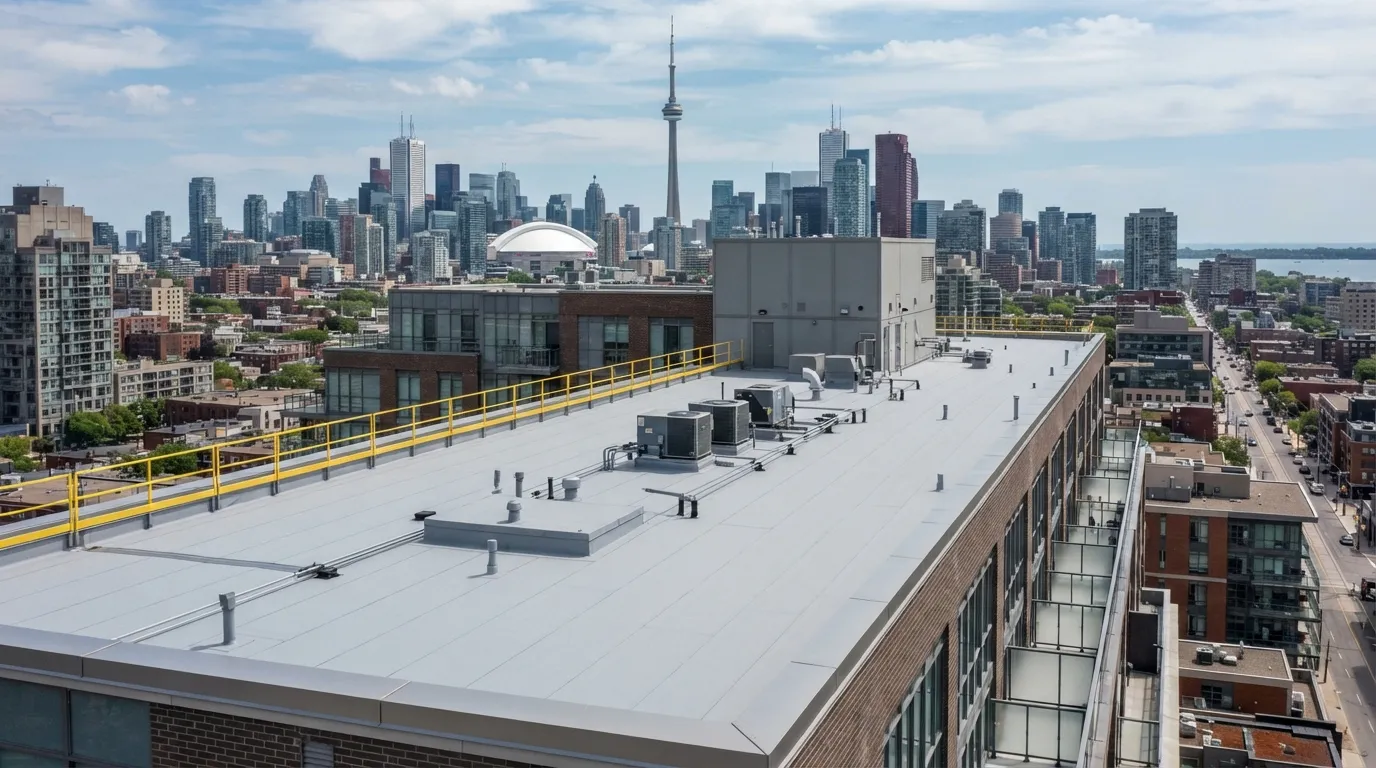
A mixed-use building in Downtown Toronto, with retail space below and residential units above, had developed ponding water and recurring leaks along its flat roof. The property manager reached out after tenants reported staining on ceiling tiles in the top-floor units.
Ponding Water
Years of minor settling had created low spots on the flat roof where water was collecting instead of draining toward the roof drains, accelerating membrane wear in those areas.
Aging Membrane
The existing modified bitumen membrane had cracked and blistered in several sections, with seams that had separated enough to allow water to track underneath during heavy rain.
Active Tenant Building
Because the building was occupied by both commercial and residential tenants, the project needed careful scheduling to limit noise, keep walkways clear, and avoid disrupting business hours in the Downtown Toronto core.
How We Did It
This flat roof restoration was completed in stages to minimize disruption to the building's tenants while addressing the drainage and membrane issues properly.
- 1
Roof Inspection and Moisture Scan
We inspected the full roof surface and checked for trapped moisture in the insulation layer beneath the membrane to identify which sections needed to be opened up versus resurfaced.
- 2
Removal of Damaged Sections
Blistered and delaminated membrane sections were cut out, along with any saturated insulation board underneath, down to a sound substrate.
- 3
Drainage Correction
Tapered insulation was added in the low-lying areas to improve slope toward the existing roof drains and reduce future ponding.
- 4
New Membrane Installation
A new modified bitumen membrane system was torch-applied in overlapping layers, with reinforced detailing at seams, drains, and parapet walls.
- 5
Flashing and Final Walkthrough
All parapet and mechanical curb flashings were resealed, and the completed roof was walked and photographed for the property manager's records.
The Result
The restored flat roof gives the building a watertight surface with corrected drainage, addressing both the visible leaks and the underlying cause.
No More Ponding
The added tapered insulation now directs water toward the drains rather than letting it collect on the membrane, reducing long-term wear.
Leak-Free Ceilings
Top-floor tenants in the Downtown Toronto building no longer have to worry about staining or water intrusion during heavy rainfall.
Documentation for the Property Manager
The property manager received photos and material details for insurance and maintenance records, useful for future capital planning on the building.
Common Questions About Flat Roof Restoration
How do you know if a flat roof needs restoration versus full replacement?
We assess membrane condition, insulation moisture, and structural drainage. If the deck and most of the insulation are sound, targeted restoration is often more cost-effective than a full tear-off.
What causes ponding water on a flat roof?
Ponding usually results from building settlement, insufficient slope, or clogged drains. Adding tapered insulation in low spots is a common fix, as we did on this Downtown Toronto building.
Can flat roof work be done while a building stays occupied?
Yes, with careful scheduling. We coordinate access, noise-generating work, and material staging to minimize disruption for tenants and businesses.
How do I get a quote for a commercial or mixed-use flat roof?
Email us with the building address, approximate roof size, and a description of the issue, and we'll arrange an inspection.
Dealing with a Leaking Flat Roof in Downtown Toronto?
Email us the details of your building and roof concerns to get started.
Get a Free Quote